Strait of Hormuz Disruption: What It Means for European Importers and Carriers
In short: The Strait of Hormuz disruption is reshaping fuel costs, transport lanes and carrier sourcing for European importers and carriers. Learn why lane-based visibility, verified carriers and direct contact matter more in volatile freight markets.
Strait of Hormuz Disruption: What It Means for European Importers and Carriers
Updated: 29 June 2026. The Strait of Hormuz disruption is not only an energy headline. For European importers, freight forwarders and carriers, it can quickly become a question of fuel costs, transport lanes, carrier sourcing, verification and direct contact.
When Hormuz appears in the news, most people think about oil and LNG first. That is understandable. But European logistics teams should look one step further. A shock around this chokepoint can move through the supply chain in layers: vessel confidence, fuel expectations, insurance risk, freight pricing, port timing, inland capacity and the availability of reliable European carriers on specific lanes. This is where the European carrier search experience becomes practical rather than theoretical.
A disruption in the Gulf does not need to physically block a truck in France, Germany, Spain, Italy, Poland or the Netherlands to affect European freight. It only needs to change cost assumptions, timing or carrier behavior. Once that happens, the impact starts appearing in quotes, surcharge discussions, lead times and backup transport decisions.
Why Hormuz matters to European trade
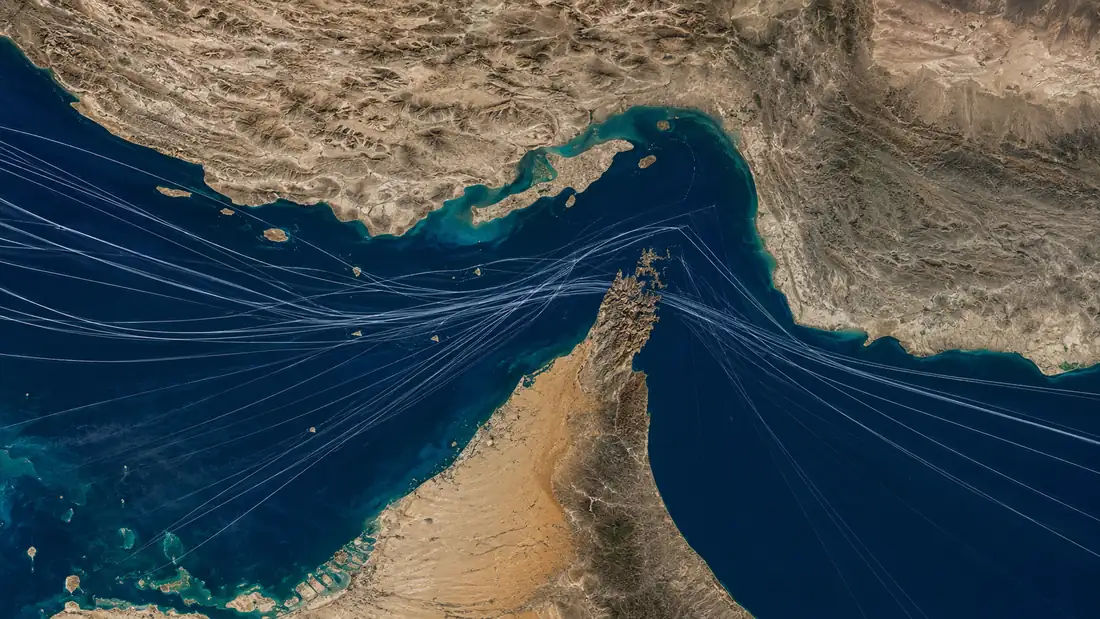
The Strait of Hormuz connects the Persian Gulf with the Gulf of Oman and the wider Indian Ocean. It is narrow, strategically sensitive and heavily used by tankers moving oil and LNG from the Gulf region toward global markets.
Europe is not always the direct final destination of those flows. Many Gulf energy exports move toward Asia. But energy markets are global, and European freight is exposed to global fuel expectations. When a chokepoint becomes unstable, diesel, bunker fuel, insurance conditions, vessel planning and market confidence can change quickly.
For a European importer, the effect can be indirect but still real. A company importing machinery parts from Asia, retail goods into France, components into Germany or food products into Spain may not buy oil. But it depends on a transport system where fuel costs, maritime schedules and inland carrier pricing are connected.
The first impact: fuel costs and freight pricing
The most immediate freight risk is usually fuel. If Hormuz becomes unstable, oil markets often price in uncertainty before any full physical disruption is visible. That matters for European road freight, maritime transport, air cargo and multimodal chains.
For carriers, diesel exposure can change the economics of a lane quickly. A long cross-border movement from Spain to Germany, Italy to France, Poland to Belgium or the Netherlands to Austria is not affected in the same way as a short local delivery. Longer lanes feel fuel volatility more directly.
For importers and shippers, the signs are practical:
- Shorter quote validity windows because carriers do not want to absorb fast-moving fuel risk.
- More visible fuel surcharges in both contract and spot negotiations.
- More selective carriers on low-margin or imbalanced transport lanes.
- Higher pressure on urgent shipments when there is little time to compare options.
This is why Hormuz connects naturally with How to Secure Reliable European Carriers When Fuel Costs Spike. The trigger may be geopolitical, but the cost impact is felt lane by lane across Europe.
The second impact: uncertainty before the goods reach Europe
Hormuz is not the same corridor as Suez or the Red Sea for container flows, but it still influences wider shipping behavior. When risk rises around a maritime chokepoint, shipowners, insurers, charterers and cargo owners become more cautious.
The problem is rarely only whether a route is open or closed. The real problem is uncertainty.
- Is the vessel moving normally?
- Will insurance conditions change?
- Will fuel costs rise before the shipment is booked?
- Will the ETA shift again?
- Will the inland leg need to be rearranged at short notice?
A shipment delayed before departure can disturb a carrier booking weeks later. A changed ETA can make a truck slot useless. A new fuel expectation can force procurement to re-check rates. That is why importers should not wait until cargo is already late before looking at inland transport options.
The inland effect: where European importers really feel it
A Hormuz disruption may begin at sea, but European importers often feel the pressure inland. Think about cargo arriving at Rotterdam, Antwerp, Hamburg, Marseille, Valencia, Genoa or Le Havre after several days of uncertainty. The goods still have to move from port to warehouse, factory, distribution center or final customer.
That inland leg may require container trucking, reefer capacity, flatbed transport, LTL, groupage, rail, barge or a multimodal solution. If the arrival changes, the original inland plan may no longer work.
This is where many teams lose time. Not because Europe has no carriers. Because it is still hard to know which carrier actually fits the exact lane and transport type.
That clarity gap is also described in Too Many Carriers, Not Enough Clarity: A European Freight Reality. During disruption, a long list of names is not enough. Importers need lane-fit options.
Why European importers should think by lane
A common mistake in freight planning is to think too broadly: “we need a carrier in Europe”, “we need someone in Germany”, or “we need a truck from the port”. In European logistics, that is not precise enough.
A carrier is useful only if it matches the actual movement. A company may be strong in France but irrelevant for France to Poland. Another may cover Germany but not handle containers from Hamburg to Czechia. Another may be excellent in reefer transport but not suitable for flatbed, tanker, groupage or low-loader freight.
Transport type. Origin. Destination. That is the logic behind LaneList.
During a disruption, the real question is not “Who is a good carrier?” It is: who can operate this lane, with this transport type, at this moment?
That is why Why European Freight Should Be Organized by Lanes, Not Companies is a strong internal companion to this article.
What changes for European carriers
Hormuz disruption is not only a risk for importers. It also changes the operating environment for European carriers. When energy markets move, carriers have to protect their margins. They may revise surcharges, reduce quote validity, become more selective on low-margin lanes or prioritize customers with clearer planning.
This is not necessarily bad behavior. It is survival in a cost-sensitive industry. But it means carriers need to communicate their strengths more clearly.
A serious carrier should make it easy for potential clients to understand:
- which countries it serves,
- which transport lanes it operates,
- which transport types it handles,
- whether it covers cross-border freight,
- whether it supports urgent or specialized moves,
- and how it can be contacted directly.
During disruption, visibility becomes commercial advantage. If you are a European carrier, this is a good moment to make your lanes visible through Add your company.
Verification matters more in a volatile market
When disruption increases, trust becomes more important, not less. Some teams think speed means skipping checks. In reality, the faster the market moves, the more valuable good trust signals become.
A verified carrier does not remove every operational risk. Freight still requires normal due diligence: availability, insurance, documents, pricing conditions, subcontracting logic and service scope. But verification helps at the first step.
It helps importers build a cleaner shortlist. It helps logistics agents reduce noise. It helps carriers stand out from generic names. And it helps procurement teams move faster without becoming careless.
This topic connects naturally with Finding Reliable Carriers in Europe: Essential Best Practices for Logistics Agents. In a volatile market, trust needs to be searchable.
Why direct contact matters more during disruption
When a route is stable and prices are predictable, slow communication is annoying. When the market is disrupted, slow communication is expensive.
European importers need quick answers:
- Can you cover this lane next week?
- What is your current fuel surcharge logic?
- How long is this quote valid?
- Do you have equipment available?
- Is this lane part of your regular network?
- What happens if the ETA changes again?
These questions should not take days to clarify. That is why LaneList keeps the workflow simple: search by transport type, origin and destination, find relevant carriers, and contact them directly. The workflow is explained in How LaneList works.
What importers, forwarders and logistics agents should do now
European importers cannot control Hormuz. They cannot control geopolitics, oil markets, vessel risk or insurance decisions. But they can control how prepared they are inside Europe.
A practical response should include:
- Identify critical lanes. Know which origin-destination pairs matter most for your business.
- Separate transport types. Do not treat reefer, container, flatbed, LTL, groupage and multimodal as the same problem.
- Build backup carrier options. Do this before your usual provider is unavailable.
- Review fuel surcharge exposure. Understand how carriers calculate and update fuel costs.
- Use verification where possible. Trust signals matter more when teams are under pressure.
- Protect direct contact. Make sure you can reach the right carrier quickly when plans change.
This is also where the old European freight habit of relying only on personal networks starts to show its limits. Relationships still matter, but they do not always scale during disruption. That issue is explored in Why “Who Do You Know?” Still Drives European Freight Decisions.
Final takeaway: chokepoint risk is now part of European freight planning
The Strait of Hormuz disruption may begin in the Gulf, but its consequences can reach European importers, carriers, forwarders and logistics agents quickly. The first impact may be energy. The second may be freight cost. The third may be carrier availability. The fourth may be inland planning.
That is why European companies should not look at Hormuz only as a shipping headline. They should treat it as a reminder to improve carrier sourcing.
In a volatile market, the strongest teams are not simply the ones with the longest contact list. They are the ones with the clearest view of their transport lanes, transport types, verified carriers and direct contact options.
Need to find carriers for a specific European lane? Start with LaneList carrier search. Filter by transport type, origin and destination, discover relevant European carriers, and contact them directly. For questions, partnerships or verification, visit the Contact page.
Filter. Match. Contact. In stable times, it saves time. In disrupted times, it becomes a competitive advantage.