Why “Who Do You Know?” Still Drives European Freight Decisions
In short: In European freight, trust still shapes carrier selection. Here’s why relationships matter, where they become a bottleneck, and how lane-based search helps teams scale trust with more clarity.
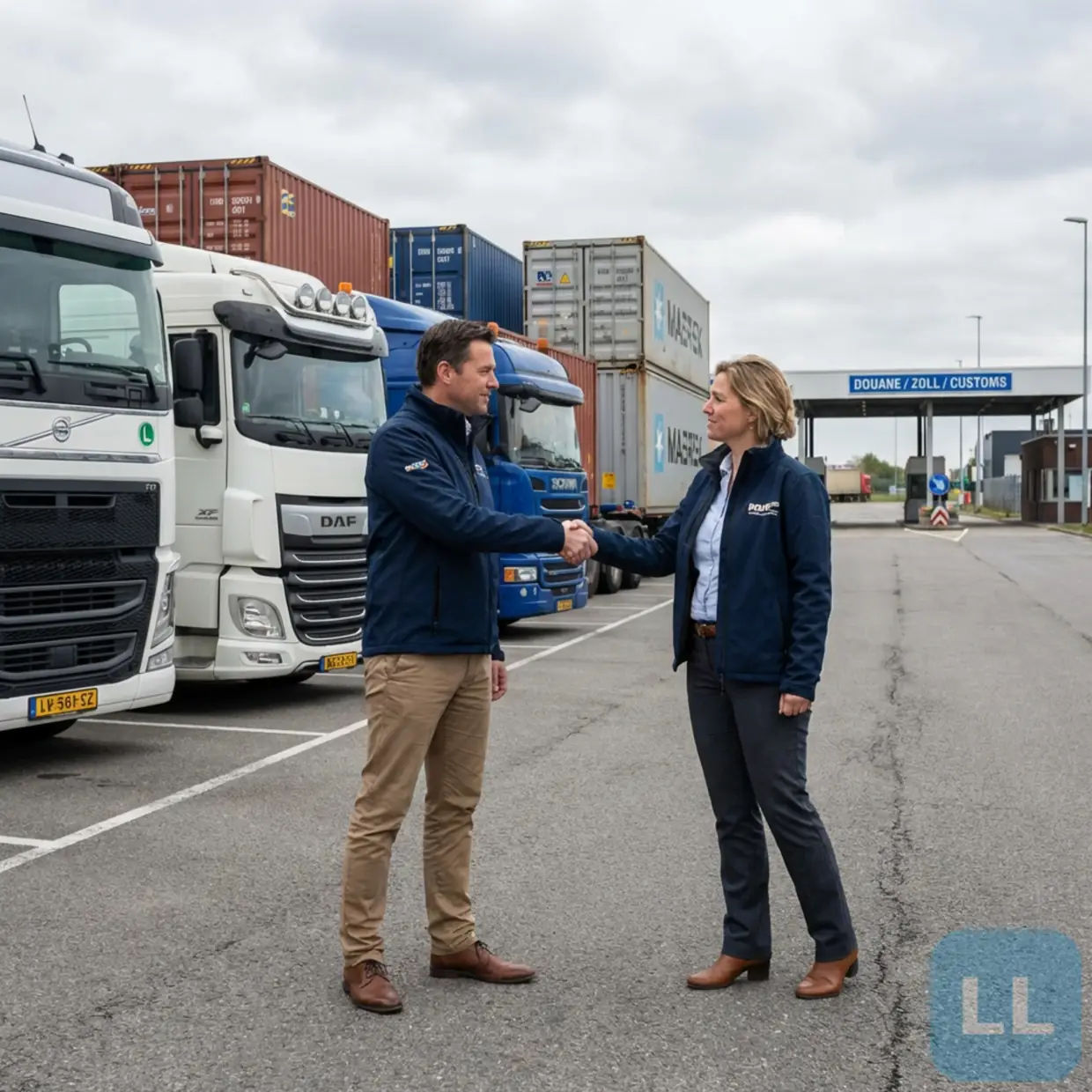
Why “Who Do You Know?” Still Drives European Freight Decisions
In European freight, people like to talk about systems, rates, capacity, compliance, transit times, customs flows, visibility tools, and procurement strategy. All of that matters. But in the real world, one question still shapes an enormous number of transport decisions:
Who do you know?
That question is not old-fashioned. It is operational.
A French exporter with urgent palletized freight to Spain does not just need “a carrier.” They need a carrier that actually runs that lane, understands the loading constraints, answers quickly, and will not disappear the moment something goes wrong. A buyer moving temperature-sensitive cargo from Belgium to Italy is not searching for theory. They are searching for a reliable outcome. A trader with repeated flows from Germany into Poland often trusts a familiar operator long before trusting a new name found in a generic directory.
That is why relationships still matter so much in freight. And it is also why so many decisions in European transport remain shaped by closed networks, referrals, WhatsApp groups, long-standing brokers, personal contact books, and informal recommendations.
The problem is that relationship-based freight buying works brilliantly right up until it stops working.
When your trusted contact has no truck available, does not cover the exact lane, cannot handle the transport mode you need, or simply quotes too slowly, you hit a wall. In Europe’s fragmented freight landscape, that wall appears often. The market is cross-border, operationally diverse, and highly specialized from one corridor to the next.
In that kind of market, relying only on “who you know” is too narrow. But ignoring trust is naïve.
The smart approach is not to replace relationships. It is to scale trust intelligently.
That is exactly where LaneList fits. Its logic starts with the real transport question: transport type + origin + destination. Instead of browsing a generic list of company names, users can search by lane, filter by transport type, optionally focus on verified carriers, compare results, and then contact providers directly. If you want the product overview first, see How LaneList works.
Why personal networks still dominate European freight
Freight is not like booking a hotel room or ordering office supplies. Transport decisions sit at the intersection of risk, timing, margin, customer service, insurance exposure, and reputational damage. One failed movement can trigger delays, penalties, stockouts, lost shelf space, production stoppages, or a damaged client relationship.
So buyers fall back on the people they trust.
That instinct makes sense for several reasons.
1) Freight is still a trust business
A lane is never just a line between two countries. It includes pickup discipline, border familiarity, equipment availability, communication quality, language comfort, documentation quality, and how the carrier behaves under pressure.
When shippers say, “I know someone good on that route,” what they usually mean is:
- they have seen the carrier perform before,
- they know the service level is real,
- they believe the company is reachable when things get messy,
- and they trust the commercial relationship enough to move quickly.
That trust has real value. In freight, speed without trust is risky. Trust without fit is inefficient. The goal is both.
2) Europe is large, multilingual, and fragmented
European freight is cross-border by nature, but operational reality changes fast from one corridor to another. The rules, market norms, lane density, backhaul logic, and carrier specializations are different between Iberia, Benelux, Central Europe, the Nordics, the Balkans, and UK-linked flows.
A carrier may be excellent on Italy–France reefer traffic and useless for Germany–Romania flatbed moves. Another may be strong in groupage inside Western Europe but irrelevant for heavy haul or Ro-Ro work. Lane coverage is not universal. It is specific.
That is why general directories often disappoint buyers. They list companies, not necessarily the right companies for the exact move. We covered that same structural issue in more detail here: Why European freight should be organized by lanes, not companies.
3) When stakes are high, buyers reduce uncertainty
If a shipment is urgent, refrigerated, oversized, high-value, or commercially sensitive, procurement teams usually become conservative. They do not want to spend hours sifting through irrelevant options. They want narrower, better-fit options with clear contact details and enough confidence to start a conversation.
That is why “verified” matters.
LaneList’s model gives users the option to narrow results to verified carriers, which helps improve the quality of the first shortlist. That does not replace due diligence, but it does reduce noise and early-stage uncertainty.
The hidden cost of relying only on “who you know”
Relationships are useful, but over-reliance on them creates blind spots.
You keep going back to the same small circle
Many traders and shippers default to the same 5 to 20 contacts. That feels efficient, but it creates dependency. If those providers are overloaded, overpriced, lane-limited, or not specialized for the move, the buyer is stuck.
You miss better-fit carriers
A familiar contact is not always the best operational fit. Maybe you need reefer instead of normal truck. Maybe the move is multimodal, not road-only. Maybe the lane is strong in one direction but weak in the reverse. Maybe a specialist carrier exists in your target corridor, but nobody in your network has introduced them yet.
That is where a lane-first search layer adds value. LaneList is built around transport types and country pairs, which makes it more useful than a generic “find a carrier” page that ignores route logic. You can explore the search entry point here: European carrier search.
Informal networks do not scale well
A sales manager can manage freight through personal contacts for a while. A procurement team with multiple countries, seasonal demand swings, and changing customer requirements cannot rely forever on memory, old email threads, and scattered referrals.
The bigger your European footprint becomes, the more dangerous it is to depend only on informal market access.
New market entry becomes harder than it should be
A company expanding from France into Spain, Germany into Italy, or Benelux into Central Europe often discovers the same issue: they know the commercial opportunity, but not the carrier landscape. Without a lane-based discovery layer, they end up asking around, losing time, or defaulting to intermediaries they do not actually need.
LaneList is explicitly built to shorten that gap: search, find carriers operating the lanes you need, compare relevant options, and contact them directly without the platform sitting in the middle of the commercial negotiation.
Why trust still wins, even in a digital market
A lot of digital freight messaging gets this wrong. It assumes technology should replace relationship-driven buying. That is not how transport works.
Technology should reduce friction, not erase trust.
The strongest freight tools do three things well:
- They help you find relevant operators fast.
- They help you judge trust signals quickly.
- They let you contact the provider directly and make your own decision.
That is why LaneList’s positioning is commercially smart. It does not try to behave like a broker. It does not claim to replace negotiation. It does not force the relationship on-platform. It simply improves discovery and qualification, then gets out of the way. If you want to see the platform logic in short form, start with Filter → Match → Compare → Contact.
That model matches real freight behavior better than over-engineered marketplaces that try to control every step.
In practice, freight buyers still want human judgment. They still want to choose who they contact. They still want to negotiate privately. They still want to decide whether a carrier feels commercially credible.
Digital discovery does not replace that. It strengthens it.
From closed network to searchable trust
This is the real shift happening in European freight.
For years, access to quality carriers depended heavily on closed circles:
- someone your forwarder recommended,
- someone your customer used before,
- someone your operations manager worked with in a previous company,
- someone you met at a trade fair,
- someone who happened to answer the phone at the right moment.
That model favors incumbents, personal memory, and luck.
A lane-based search model changes the equation.
Instead of asking, “Who do I know for this kind of shipment?” you can ask a better question:
Which carriers actually run this transport type on this origin-destination pair, and which of them show stronger trust signals?
That is a much more scalable procurement question.
LaneList supports exactly that kind of search. You choose the transport type, select origin and destination countries, optionally narrow to verified carriers, review the resulting carrier cards, and then contact the provider directly using the listed methods. If there is no exact database match, clearly labeled AI suggestions can widen discovery without pretending to replace validation.
That is not anti-relationship. It is relationship-building infrastructure.
Why this matters specifically in the European market
Europe is one of the few freight environments where this problem is especially sharp.
The market is dense, international, regulated, multilingual, and full of specialist operators. Shippers frequently need:
- cross-border road freight,
- temperature-controlled transport,
- partial loads,
- groupage,
- container drayage tied to ports,
- rail-linked corridors,
- multimodal combinations,
- oversized or project cargo,
- or country-pair specialists who understand specific trade patterns.
The challenge is not that carriers do not exist. The challenge is discovering the right ones fast enough.
That is why a lane-specific search layer has strong commercial value in Europe. LaneList already frames itself around “The European Carriers Agenda,” with search by transport type, origin, and destination, plus direct contact and a verified badge system. You can also browse listed providers more directly on the carriers page.
What good freight buyers actually want now
The best European freight teams are not asking for infinite choice. They are asking for better filtered choice.
They want:
- relevant carriers, not generic supplier lists,
- mode-specific fit, not broad promises,
- lane relevance, not empty geographic claims,
- clear trust indicators,
- direct contact,
- and less wasted time.
That is why “filter first” matters. It respects the operational reality that a truck to Portugal is not the same procurement decision as a reefer to Italy, a rail move into Germany, or a multimodal corridor from Belgium to Eastern Europe.
LaneList’s product structure reflects that discipline. It starts with the lane and the mode, then narrows to matching carriers, then leaves the user in control of contact and negotiation.
That is exactly how a serious freight tool should behave.
The role of verification in a trust-first market
Trust in freight is not only emotional. It is procedural.
Buyers want signals that reduce uncertainty before first contact:
- is this company real,
- does it actually operate these lanes,
- is its service presentation coherent,
- can I identify how to reach it,
- is there any sign that someone has checked it?
That is why the verified badge matters. It formalizes an early-stage trust filter and helps move part of freight trust from private word-of-mouth to searchable visibility.
If you are a carrier and want to improve your visibility on the lanes you actually run, see Add your company.
AI should widen options, not fake certainty
Another smart part of the LaneList model is that AI suggestions are clearly separated from verified database matches. That is the right approach.
In freight, AI is useful when it helps buyers discover possibilities they may have missed. It becomes dangerous when it pretends to replace validation.
A good transport search platform should use AI as a discovery assistant, not as a guarantee machine.
That distinction builds credibility with serious operators.
So, does “who do you know?” still drive freight decisions?
Yes.
It still drives first calls, shortlist confidence, emergency problem-solving, and repeat purchasing. It still influences who gets trusted faster. It still matters across Europe because freight remains operationally messy, time-sensitive, and relationship-heavy.
But that is no longer the full story.
The more important question now is:
How do you move from private trust to searchable trust?
That is where modern freight discovery wins.
Instead of forcing buyers to choose between old-school relationships and digital efficiency, the best platforms combine both:
- lane precision,
- transport-type relevance,
- verification signals,
- direct contact,
- and room for human judgment.
That is the real opportunity in European freight.
Not replacing relationships.
Not pretending trust does not matter.
Not drowning users in irrelevant carrier lists.
Just helping the right companies find each other faster.
And that is why “who do you know?” still drives European freight decisions — but increasingly, the winners will be the businesses that make trusted lane discovery easier, faster, and more transparent.
LaneList is well positioned for that shift because its logic mirrors how freight buyers actually work: Filter. Match. Contact.
Related reading: Too Many Carriers, Not Enough Clarity, Why European freight should be organized by lanes, not companies, and Contact LaneList for verification, partnerships, or support.