The Hidden Problem in European Freight
In short: European freight faces a deeper challenge than capacity shortages. This analysis explores fragmentation, visibility and why clarity is becoming a strategic asset.
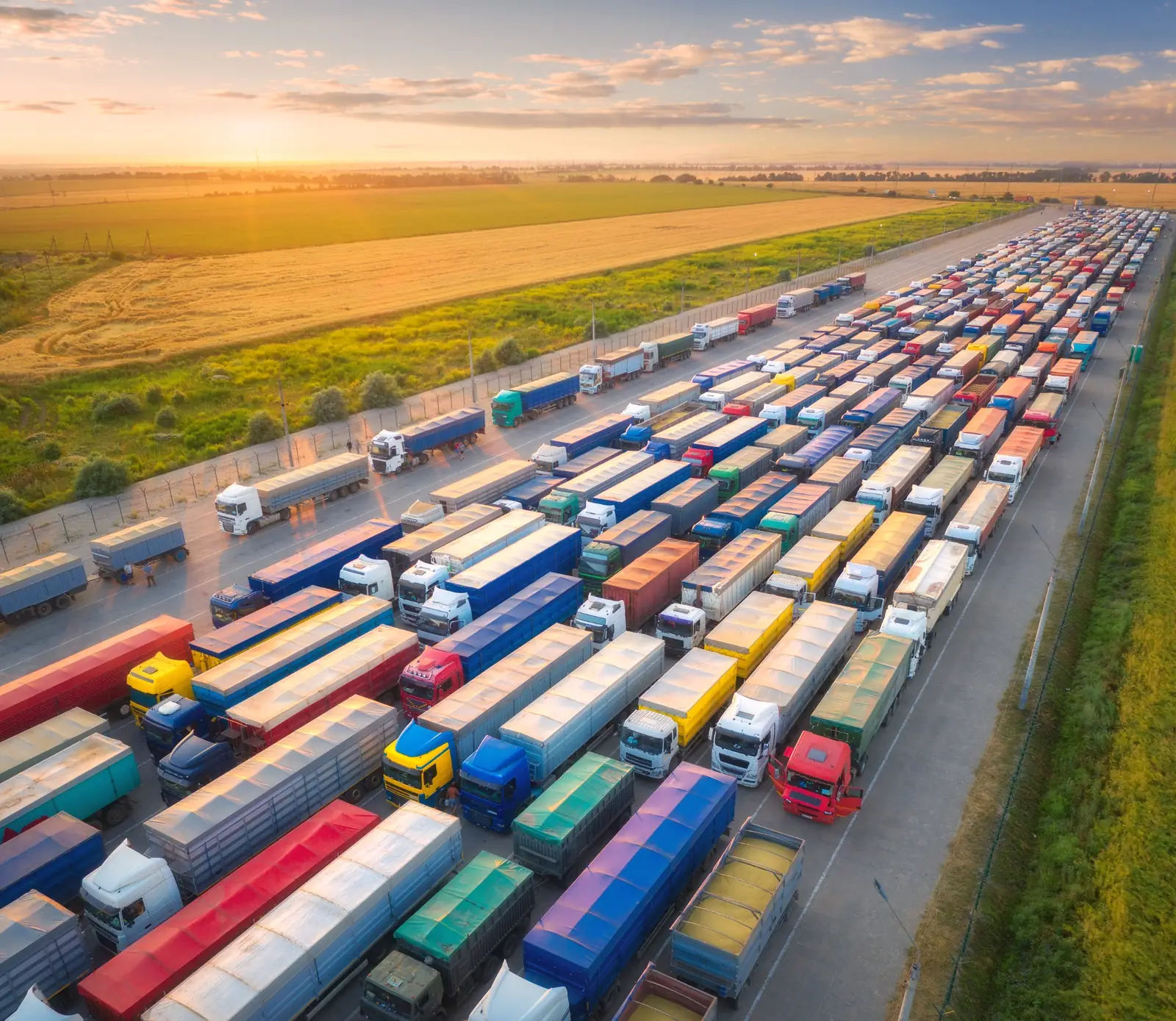
The Hidden Problem in European Freight
European freight is often described as a capacity issue. Shortages of drivers, congestion on key corridors, rising fuel costs, or limited rail availability are frequently cited as the main challenges facing the sector.
Yet beneath these visible constraints lies a deeper, less discussed problem — one that affects daily operations, strategic planning, and long-term resilience across Europe.
The hidden problem in European freight is not only capacity. It is visibility and readability.
A fragmented transport landscape
European freight operates within one of the most complex transport ecosystems in the world. Unlike single-market systems, Europe is characterised by:
- multiple national regulations
- diverse market structures
- varying levels of infrastructure maturity
- different dominant transport modes depending on geography
Road, rail, maritime and air transport coexist, but rarely function as a fully integrated system. While the European Union promotes interoperability and multimodality, the reality on the ground remains fragmented.
For freight forwarders and logistics operators, this fragmentation translates into partial information, siloed decision-making, and increased operational risk.
When data exists, but clarity does not
The European freight sector is not lacking data. On the contrary, data is abundant:
- carrier databases
- freight platforms
- national registries
- market reports
- internal operational tools
The challenge lies elsewhere.
Data is often:
- dispersed across multiple sources
- structured differently depending on country or mode
- difficult to compare or aggregate
- disconnected from real operational lanes
As a result, decision-makers may have access to information, but not to a coherent reading of European transport flows.
The daily reality for forwarders and operators
For many logistics professionals, the difficulty is not finding a carrier — it is finding the right carrier for a specific lane, under specific constraints, at a specific moment.
This includes questions such as:
- Which carriers operate reliably on this cross-border lane?
- Which transport mode is realistically available, not just theoretically possible?
- How do country-specific constraints affect lead times and costs?
Without a clear, lane-based perspective, decisions are often made reactively rather than strategically.
The illusion of capacity shortages
Capacity shortages are real in certain regions and at certain times. However, many inefficiencies in European freight stem from misaligned visibility rather than absolute scarcity.
Capacity may exist, but:
- it is not visible at the right moment
- it is not mapped correctly to demand
- it is hidden behind fragmented information
This creates the perception of permanent shortage, while the underlying issue is often a lack of structured access to existing capacity.
Why technology alone is not the solution
Digitalisation, automation and artificial intelligence are increasingly promoted as solutions to freight complexity. These technologies have clear potential, but they are not sufficient on their own.
Technology amplifies structure. If the underlying structure is fragmented, technology risks accelerating confusion rather than resolving it.
Before optimisation comes understanding:
- understanding lanes rather than isolated shipments
- understanding flows rather than individual transactions
- understanding Europe as a connected transport space
Rethinking freight through a lane-based perspective
A growing number of professionals are shifting their focus from modes and transactions to transport lanes.
A lane-based perspective allows:
- better comparison between modes
- clearer identification of bottlenecks
- more realistic planning across borders
- improved carrier matching
Instead of asking “Which carrier can transport this shipment?”, the question becomes: “How does this lane function within the European freight network?”
A structured approach to European freight visibility
Lanelist was developed in response to this exact challenge: making European freight lanes more readable.
By organising transport information around lanes, countries, destinations and modes, the goal is not to sell capacity, but to clarify how European freight actually operates — based on verified actors and real connections.
This approach reflects a broader shift within the industry: from fragmented listings to structured visibility.
The strategic implications for European logistics
As supply chains become more exposed to geopolitical, environmental and economic shocks, visibility becomes a strategic asset.
Freight is no longer only an operational concern. It is:
- an economic factor
- a resilience issue
- a competitive differentiator
Organisations that understand European freight as an interconnected system — rather than a series of isolated markets — are better positioned to adapt.
Conclusion: the real challenge ahead
The hidden problem in European freight is not a lack of infrastructure, technology or even carriers.
It is the difficulty of seeing the full picture.
Improving visibility, readability and structural understanding of European transport lanes may prove more impactful than any single technological breakthrough.
In a complex and evolving market, clarity is not a luxury. It is a necessity.