Lanelist and the Future of European Transport | Analysis
In short: European transport is undergoing a strategic transformation. This analysis explores how data, multimodality and platforms like Lanelist are reshaping logistics across Europe.
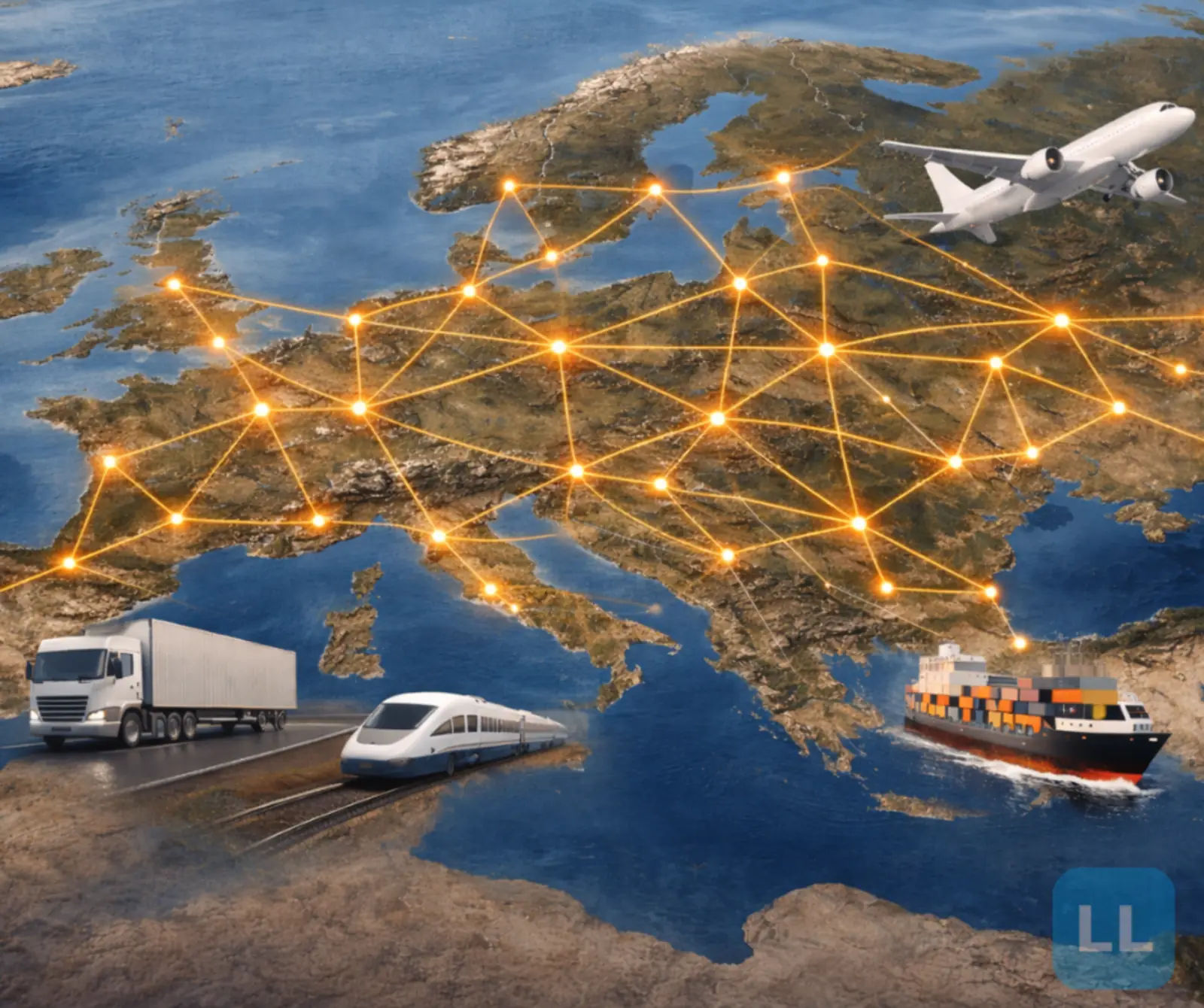
Lanelist and the Future of European Transport
European transport is entering a strategic turning point. Rising costs, environmental transition, regulatory complexity and accelerated digitalisation are reshaping the logistics landscape across the continent.
In this context, having a clear and structured overview of European transport is becoming essential.
A fragmented and pressured ecosystem
European transport is built on multiple actors, national regulations and diverse transport modes. This fragmentation makes it difficult to gain a global understanding of flows and complicates decision-making.
Road, rail, sea and air can no longer be managed in isolation. Multimodality is increasingly necessary, but it requires tools capable of connecting information coherently.
Data and anticipation as strategic assets
The growing role of data and artificial intelligence is transforming European logistics. Flow anticipation, corridor analysis and capacity visibility are becoming key levers to reduce uncertainty and improve supply chain resilience.
However, data only becomes valuable when it is readable, structured and accessible.
A platform designed for European transport stakeholders
Lanelist was created to address a simple yet critical need: facilitating access to European carriers based on routes, countries and transport modes.
By enabling searches by mode, country of origin and destination, the platform provides a practical and reliable view of available transport capacity across Europe, while highlighting verified carriers.
Rethinking how European transport is understood
Beyond the platform itself, this approach reflects a broader shift in the sector: moving from fragmented decision-making to a more integrated and strategic reading of transport flows.
As logistics becomes an economic and geopolitical concern, understanding European transport as a whole is no longer optional.